hacker…

… a person who compromises digital services and networks through unauthorized access to an account or computer system.   

OR, a person who uses their technical knowledge to achieve a goal or overcome an obstacle by non-standard means. (Wikipedia source for this somewhat altered version

The same concept, but as soon as one takes out the information technology and/or computer systems terminology, one begins to see a broader concept.  

Take work for example.  How many of us have ‘hacked’ our way through a project or sometimes just our day, taking the road less travelled one might say, in order to get it done.   

We’re all hackers to some degree, some of us more than others because the world is moving too fast for the systems to keep up.     

It’s now OK because it’s gone mainstream.  

Take a look at the second definition again and see where you stand.   

What did you hack today?  

If you didn’t, put on your hacker hat and think about what you could do better, quicker, easier, or more simply outside of how you’re supposed to do it?   

PS: This blog post was thought of and written by me, no AI here, and is a mosaic of my experience, reading, and learning.
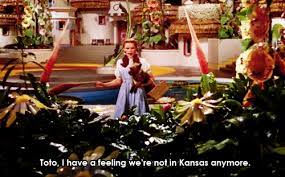
We’re not in Kansas anymore…

  …as Dorothy wondered and exclaimed to her dog Toto in “The Wizard of Oz.” 

An article about theatres having challenges after the pandemic caught my eye during my week(s) off.  The gist of the piece outlined the small attendances, reduced programming, and staff layoffs not to mention local and Federal grants drying up.  

Throughout the entire article, there was no mention of what these organizations were doing to address these and other challenges, but maybe the article was just about the complaints and problems being faced, not the solutions.  

The pandemic seems to have turned things upside down a bit but what I have found in some cases is that the issues now being faced were present prior to the pandemic.  The pandemic just accelerated the issues showing up, not specifically causing them.

So, are these organizations doing the same things, trying to go back to an old normal using pre-pandemic mindsets to solve post-pandemic problems?

A better strategy for all of us might be to look at our situations and issues and engage with them as they now stand with the resources and insights we presently have so we can move forward to a more useful place.   

We’ve all heard the famous definition of insanity outlined by Albert Einstein, “doing the same thing over and over again and expecting different results.   

Maybe we’re all just a little insane at the moment.  

I heard somewhere that right now might be the last time things will be the same and, like Dorothy, we’re just coming to grips with the fact that we’re not in Kansas anymore.   

Written while listening to an Emilie Autumn mix.  

This blog post was thought of and written by me, no AI here, and is a mosaic of my experience, reading, and learning.

The Crossroads

is a term often referring to bluesman Robert Johnson’s meeting with the devil at the old intersection of US Highways 49 and 61 in the state of Mississippi.

To become the best blues player of them all, he decided that selling his soul to the devil in order to achieve his dream of fame and fortune was the way to go.

More importantly, the crossroads is a point of decision or a critical juncture, a deeply rooted metaphor where one meets, mingles, and makes choices. (not my definitions)

No matter which definition or story one chooses, we have all visited our own personal crossroads when confronting a major decision or embarking on a certain direction.

When we think of having to ‘sell our soul,’ even metaphorically in making certain decisions of whatever sort from a “failure is not an option.” or “do or die” kind of thinking, we seem to put ourselves in a more difficult position than is necessary.

A position that may put us on defense where we delay the decision for another day, hide a bit longer, and “think about it” a little more until we have all the requisite facts and figures.

When we realize that many decisions are not that momentous and can be revoked, changed, or reworked, even the really large ones, the pressure comes off. As we don’t have to confront the devil, and he isn’t going to be coming for our soul at any time soon, a decision can be made more easily and whatever it is can get done.

In making those big decisions, even the crossroad ones, we’re as likely to make as good a decision today as we’ll make tomorrow or next week. Just making a decision, no matter how it turns out, is actually progress and a step forward.

And if the decision proves to be wrong, or not as effective as we thought it might be, we can make a new decision about the old decision and again make progress and move forward.

So, in the final analysis, it turns out that Robert Johnson more than likely didn’t meet the devil at the crossroads but spent a year learning how to play the guitar from an Ike Zimmerman in a local graveyard.

Unfortunately, the reality doesn’t live up to the story, as it rarely does, and these stories, both the devil at the crossroads and the ‘do or die’ decision situation continue to circulate, entertain, and dismay even though they may not be true.

But we can all take heart and work at moving one step beyond the stories by practicing a habit of better, and maybe slightly quicker, decision-making so they don’t continue to pile up as they may have in the past.

And we don’t even have to travel to Mississippi to do it.

Written while listening to a blues anthology by the MCCall Brothers Band,

One of the best things I’ve come across this week is Marc Andreesen’s piece on the emergence of AI.

This blog post was thought of and written by me, no AI here, and is a mosaic of my experience, reading, and learning.